
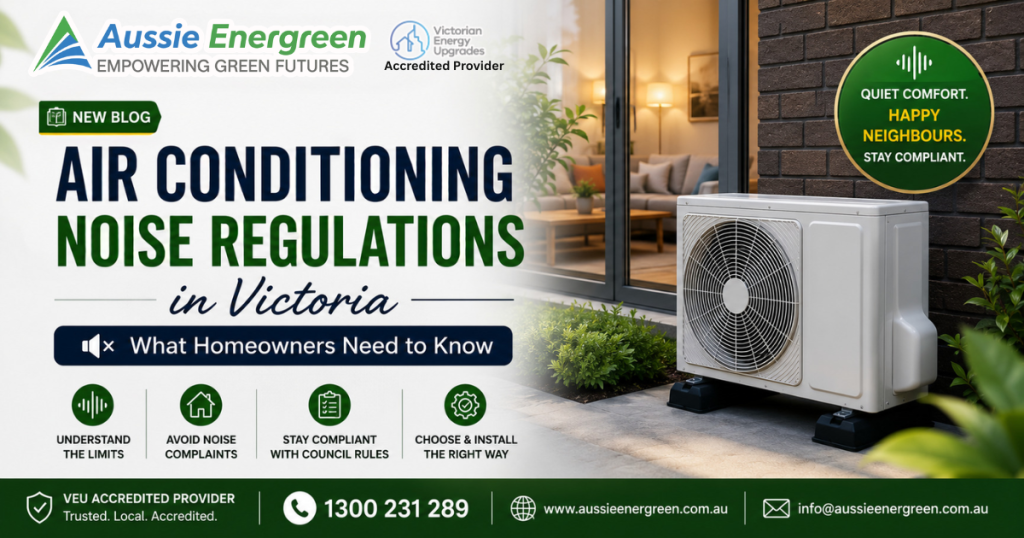
Installing an air conditioner is one of the best ways to improve comfort throughout the year. However, many homeowners overlook an important factor—noise compliance. An air conditioning system that is too loud or poorly positioned can lead to neighbour complaints and may breach Victoria’s environmental noise regulations.
Understanding the state’s noise requirements before installing or replacing an air conditioner can help you avoid unnecessary issues while ensuring your system operates efficiently and responsibly.
At Aussie Energreen, a VEU Accredited Provider, we provide expert air conditioning installation across Melbourne, Geelong, Ballarat, Bendigo, Melton, Officer, Colac, and surrounding Victorian suburbs. Our experienced team installs systems designed to deliver excellent comfort while considering proper placement and compliance with applicable regulations.
What Are Air Conditioning Noise Regulations?
Air conditioning noise regulations are guidelines designed to limit excessive noise produced by outdoor air conditioning units. These rules help maintain a peaceful environment while allowing homeowners to enjoy the benefits of efficient heating and cooling.
In Victoria, noise regulations form part of the state’s environmental protection framework and aim to:
- Protect community wellbeing
- Reduce excessive residential noise
- Minimise neighbourhood disputes
- Encourage responsible installation practices
These regulations consider several factors, including:
- The noise level produced
- The location of the outdoor unit
- Time of day
- Duration of the noise
The goal is to balance homeowner comfort with the right of neighbours to enjoy a quiet living environment.
What Causes Air Conditioner Noise?
Every air conditioning system produces some level of sound during normal operation. The amount of noise depends on the system type, installation quality, maintenance, and equipment design.
Common sources of noise include:
Fan Operation
The outdoor fan circulates air through the condenser and naturally creates airflow noise.
Compressor Operation
The compressor is the heart of the system and usually produces a low humming sound while operating.
Refrigerant Movement
As refrigerant flows through the system, slight hissing or bubbling sounds may occur during normal operation.
Common Air Conditioner Sounds
Different sounds can indicate normal operation or potential problems.
| Noise Type | Possible Cause |
|---|---|
| Low hum | Normal compressor operation |
| Fan airflow | Normal cooling cycle |
| Clicking | System starting or stopping |
| Rattling | Loose panels or components |
| Hissing | Refrigerant flow or possible leak |
| Vibrating | Poor installation or loose mounting |
If your system suddenly becomes much louder than usual, it is recommended to arrange a professional inspection.
How Is Air Conditioner Noise Measured?
Air conditioner noise is measured in decibels (dB), which indicate the intensity of sound.
For comparison:
| Sound | Approximate Noise Level |
|---|---|
| Whisper | 30 dB |
| Quiet home | 40 dB |
| Normal conversation | 60 dB |
| Vacuum cleaner | 70 dB |
Many modern residential air conditioners operate well below older models, with premium systems designed to run more quietly.
Professional sound level meters are used to accurately measure noise levels when required.
Why Do Noise Regulations Matter?
Noise regulations exist to protect both homeowners and the wider community.
Their benefits include:
- Protecting public health
- Reducing sleep disturbances
- Maintaining peaceful neighbourhoods
- Preventing disputes between neighbours
- Encouraging quieter, more energy-efficient air conditioning systems
Choosing a quality air conditioner and having it installed correctly can significantly reduce noise.
Can Your Neighbours Complain About Air Conditioner Noise?
Yes.
If an air conditioner creates excessive noise that causes unreasonable disturbance, neighbours may raise the issue with the property owner or contact the relevant local authority.
Complaints are more likely when:
- The unit operates very loudly.
- Noise continues for extended periods.
- The outdoor unit is installed close to neighbouring properties.
- The system is poorly maintained or damaged.
Installing the system correctly from the beginning greatly reduces the likelihood of complaints.
Victoria’s Environment Protection Act
Victoria’s Environment Protection Act 2017, which came into effect on 1 July 2021, provides the legal framework for managing environmental impacts, including noise pollution.
The legislation focuses on preventing environmental harm before it occurs and gives authorities the ability to manage excessive noise where required.
For homeowners, this means choosing compliant equipment and ensuring professional installation is important.
Understanding Noise Limits
Victoria’s environmental guidelines generally aim to ensure that air conditioning systems do not create unreasonable noise for neighbouring properties.
As a guide, noise from an air conditioner should generally not exceed the existing background noise by more than 5 dB when assessed from inside a neighbouring residence.
For example:
- Background noise: 40 dB
- Acceptable air conditioner noise: Up to approximately 45 dB
Proper installation location and equipment selection play an important role in meeting these expectations.
Signs Your Air Conditioner May Be Too Loud
An air conditioning system may require attention if you notice:
- Unusual humming
- Loud rattling
- Vibrations through walls
- Increased operating noise
- Complaints from neighbours
- Difficulty holding conversations near the outdoor unit
If these issues occur, professional servicing should be arranged.
The Quietest Air Conditioning Systems
Modern inverter reverse cycle air conditioners are significantly quieter than many older systems.
Some premium systems can operate at noise levels as low as 20–30 dB, making them suitable for residential environments where low noise is a priority.
Choosing a quality brand and having it professionally installed can make a noticeable difference.
How to Reduce Air Conditioner Noise
Several simple measures can help minimise operating noise.
Ensure Correct Installation
A properly levelled and securely mounted outdoor unit reduces vibration and unnecessary noise.
Schedule Regular Maintenance
Cleaning filters, tightening components, and servicing moving parts helps maintain quiet operation.
Install Vibration Dampers
Rubber mounting pads help reduce vibration transmitted through walls and concrete slabs.
Choose the Right Location
Installing the outdoor unit away from bedroom windows and neighbouring properties can significantly reduce perceived noise.
Upgrade Older Equipment
Older systems often become noisier with age. Replacing them with modern inverter technology can improve both comfort and efficiency.
How Aussie Energreen Helps You Stay Compliant
At Aussie Energreen, we understand that choosing the right air conditioner is only part of the process. Professional installation plays a vital role in ensuring efficient operation and reducing unnecessary noise.
Our experienced installers assist homeowners by:
- Recommending suitable air conditioning systems
- Selecting practical installation locations
- Installing outdoor units securely
- Minimising vibration where possible
- Ensuring systems operate efficiently
- Providing ongoing servicing and maintenance
Whether you’re replacing an older unit or installing a new reverse cycle air conditioner, our team focuses on quality workmanship and long-term performance.
Why Choose Aussie Energreen?
Homeowners across Victoria choose Aussie Energreen because we provide:
- ✔ VEU Accredited Provider
- ✔ Licensed and experienced installers
- ✔ Premium air conditioning brands
- ✔ Professional installation
- ✔ Energy-efficient heating and cooling solutions
- ✔ Friendly local service
- ✔ Residential and commercial installations
- ✔ Servicing across Melbourne and regional Victoria
Areas We Service
We proudly install air conditioning systems across:
- Melbourne
- Geelong
- Ballarat
- Bendigo
- Melton
- Officer
- Colac
- Werribee
- Tarneit
- Cranbourne
- Frankston
- Dandenong
- Sunbury
- Pakenham
- Bacchus Marsh
and surrounding Victorian suburbs.
Summary
Air conditioning systems naturally produce some noise, but correct product selection, professional installation, and regular maintenance can help keep sound levels to a minimum. Understanding Victoria’s air conditioning noise regulations is important for maintaining a comfortable home while respecting your neighbours. If you’re planning a new installation or replacing an older system, working with an experienced installer can help you achieve reliable performance and minimise potential noise concerns.
Frequently Asked Questions
1. What is considered normal air conditioner noise?
Most modern air conditioners produce a low humming or airflow sound during normal operation. Excessive rattling, vibrating, or loud humming may indicate a maintenance issue.
2. Can neighbours complain about my air conditioner?
Yes. If your air conditioner creates unreasonable noise that disturbs nearby residents, they may raise concerns or lodge a complaint with the relevant authority.
3. How is air conditioner noise measured?
Noise is measured in decibels (dB) using a sound level meter.
4. How can I reduce the noise from my air conditioner?
Regular servicing, correct installation, vibration dampers, and choosing a suitable location for the outdoor unit can all help reduce noise.
5. Are newer air conditioners quieter?
Yes. Modern inverter air conditioners are generally much quieter and more energy-efficient than older models.
6. Why choose Aussie Energreen for air conditioning installation?
Aussie Energreen is a VEU Accredited Provider offering expert air conditioning installation, quality workmanship, and energy-efficient heating and cooling solutions across Melbourne and regional Victoria.
Contact Aussie Energreen
📞 1300 231 289
Looking for a quieter, energy-efficient air conditioning system? Contact Aussie Energreen today for expert advice and professional installation across Melbourne and Victoria.