
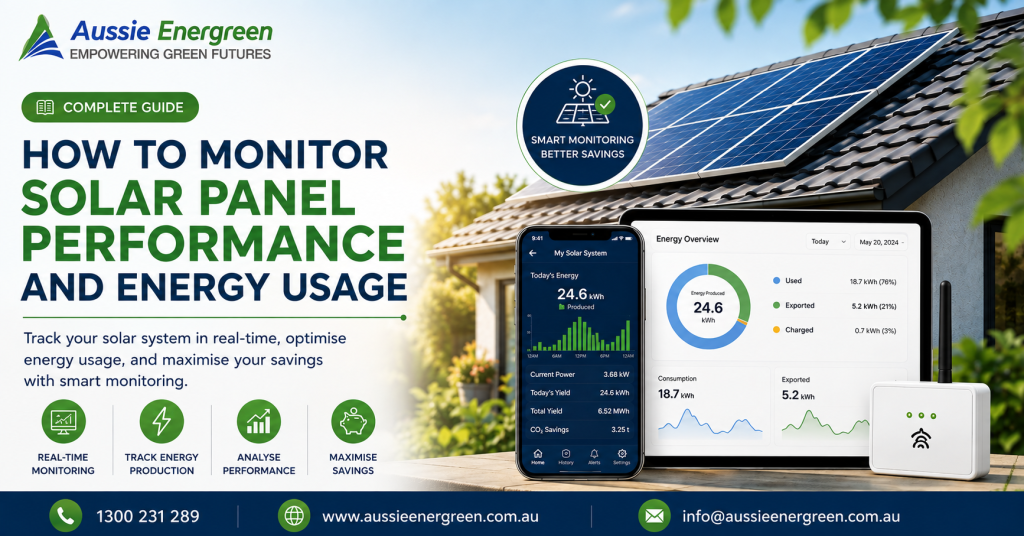
Installing solar panels is an excellent way for Melbourne homeowners to reduce electricity costs and become less dependent on the grid. However, installing a solar system is only the beginning. To get the most from your investment, it is important to understand how much energy your system generates, how much your household consumes, and how efficiently your solar power is being used.
A solar monitoring system gives you a clear view of your energy production and consumption. With real-time information available through apps and online dashboards, you can identify changes in performance, adjust your electricity usage, and make better decisions about your home’s energy.
At Aussie Energreen, we help Melbourne homeowners make the most of their solar investment with reliable solar solutions and expert guidance.
Why Is Solar Monitoring Important?
Once solar panels are installed, many homeowners assume the system will operate without needing any attention. While modern solar systems are designed for reliable performance, their output can change depending on weather conditions, shading, panel cleanliness, equipment performance, and household energy usage.
Solar monitoring helps you understand what is happening with your system.
By regularly checking your solar data, you can:
- Track daily solar energy production
- Monitor household electricity consumption
- Identify changes in system performance
- Reduce unnecessary energy usage
- Increase your use of self-generated solar power
- Reduce reliance on grid electricity
- Identify potential issues at an early stage
For Melbourne households, monitoring can be particularly useful because energy requirements can change significantly between summer and winter.
What Is a Solar Monitoring System?
A solar monitoring system is a technology that records and displays information about your solar panels and household energy use.
Most modern solar inverters can connect to a monitoring platform through a mobile application or online dashboard. Depending on your system, you may be able to see:
- Current solar power generation
- Daily, weekly, and monthly production
- Household energy consumption
- Electricity exported to the grid
- Electricity imported from the grid
- Battery charging and discharging
- System alerts and performance notifications
Having this information available makes it much easier to understand how your solar system is performing.
Types of Solar Monitoring Systems
Different monitoring solutions provide different levels of information. The right option depends on your solar system, inverter, battery, and energy management requirements.
Inverter-Based Solar Monitoring
Many modern solar inverters include built-in monitoring features. These systems provide basic information about solar generation and system performance through a mobile app or online portal.
They are a convenient option for homeowners who mainly want to know how much electricity their solar panels are generating.
Whole-Home Energy Monitoring
Whole-home monitoring provides a more detailed picture by tracking both solar production and household electricity consumption.
Instead of simply seeing how much your panels generate, you can understand when your home uses the most electricity and identify opportunities to reduce energy waste.
This can be particularly useful for Melbourne families with high-energy appliances such as:
- Air conditioners
- Heat pumps
- Electric hot water systems
- Pool pumps
- EV chargers
Solar Battery Monitoring
If your Melbourne home has a solar battery, monitoring provides additional information about how your stored energy is being used.
You can track:
- Battery charge levels
- Battery discharge
- Solar energy stored
- Energy supplied to your home
- Grid imports and exports
- Battery performance
This helps you understand whether your battery is being used effectively and how much grid electricity you’re avoiding.
How Solar Monitoring Can Help Lower Your Electricity Bills
One of the biggest benefits of monitoring your solar system is understanding when your home uses the most electricity.
For example, your monitoring dashboard may show that your household consumes a large amount of electricity in the evening when your solar panels are no longer generating power.
You can then adjust your routine by running certain appliances during the day when solar production is higher.
Consider using appliances such as:
- Washing machines
- Dishwashers
- Clothes dryers
- Pool pumps
- Electric hot water systems
during periods of strong solar generation where practical.
This allows you to use more of your own solar electricity instead of purchasing electricity from the grid.
Monitor Your Solar System to Identify Problems Early
Solar panels and inverters are built for long-term operation, but performance problems can still occur.
Potential causes of reduced solar production include:
- Dirt or debris on panels
- Shading from trees or nearby structures
- Inverter faults
- Wiring problems
- Damaged equipment
- Changes in system performance
A sudden or unusual drop in energy production can be an early warning sign that something needs attention.
Regular monitoring allows homeowners to spot unusual changes sooner and arrange professional assistance before a minor issue becomes a larger problem.
Understanding Your Solar Monitoring App
Solar monitoring apps are designed to make energy information easier to understand. Most platforms provide graphs, charts, and daily or monthly summaries.
Some of the most important figures to understand include:
Solar Production
This shows how much electricity your solar panels have generated.
Energy Consumption
This indicates how much electricity your household has used.
Grid Import
This represents electricity purchased from the grid when your solar system isn’t producing enough power.
Grid Export
This shows excess solar electricity sent to the grid.
Self-Consumption
This indicates how much of the solar electricity generated by your system is being used directly by your household.
Reviewing these figures regularly can help you understand your home’s energy habits and identify ways to improve efficiency.
Solar Monitoring for Homes with Battery Storage
Solar batteries can make your renewable energy system even more useful, but monitoring becomes particularly important when battery storage is involved.
A monitoring platform can show when your battery is charging, how much energy is stored, and when the battery is supplying electricity to your home.
For example, during a sunny Melbourne afternoon, your solar panels may produce more electricity than your home requires. Instead of sending all the excess energy to the grid, your battery can store some of that electricity for later use.
In the evening, the stored energy can then help power your home.
Monitoring lets you see this process in real time and understand how effectively your solar and battery system is working together.
What Should You Look for in a Solar Monitoring System?
When choosing a solar monitoring solution, consider more than just the basic production figures.
Important features can include:
- Mobile app access
- Real-time production data
- Household consumption monitoring
- Battery monitoring
- Grid import and export information
- Performance history
- System alerts
- Easy-to-understand dashboards
- Compatibility with your inverter and battery
It is also important to work with an experienced installer who can configure the monitoring system correctly and explain how to use it.
Common Solar Monitoring Mistakes
Simply having a monitoring app doesn’t automatically improve your energy savings. You need to use the information it provides.
Common mistakes include:
Checking Data Only When There Is a Problem
Regularly reviewing your energy trends can help you understand your system before an issue occurs.
Panicking Over Short-Term Changes
Solar production naturally varies depending on cloud cover, season, temperature, and shading. A single low-production day does not necessarily indicate a fault.
Ignoring Household Consumption
Solar production is only one part of the picture. Understanding when and how your household consumes electricity is equally important.
Not Responding to Alerts
If your monitoring system reports an unusual fault or production issue, don’t ignore it. Contact a qualified professional for assessment when necessary.
How Aussie Energreen Can Help
At Aussie Energreen, we help Melbourne homeowners make informed decisions about solar energy and home energy management.
Our team can assist with solar solutions that allow you to monitor system performance and understand your household energy consumption.
We can help you:
- Choose a suitable solar system
- Understand solar monitoring options
- Integrate compatible battery storage
- Monitor solar production and household usage
- Identify opportunities for greater self-consumption
- Understand your monitoring data
- Get professional assistance when performance issues arise
Our goal is not simply to install solar panels. We want to help you get the greatest possible value from your renewable energy investment.
Make Solar Monitoring Part of Your Energy Routine
Solar monitoring is one of the easiest ways to become more aware of how your home generates and uses electricity.
By regularly checking your solar production, household consumption, battery performance, and grid usage, you can make smarter decisions about when to use energy and identify potential performance issues earlier.
For Melbourne homeowners, combining quality solar panels, smart monitoring, and efficient energy habits can help maximise the benefits of renewable energy for years to come.
If you’re considering solar panels, battery storage, or a smarter way to manage your home’s energy, Aussie Energreen can help you choose a solution suited to your property and energy requirements.