
Rooftop solar has become an increasingly popular way for Australian homes and businesses to generate their own electricity. But how does a solar system actually work, and what happens when your panels produce more electricity than you are using?
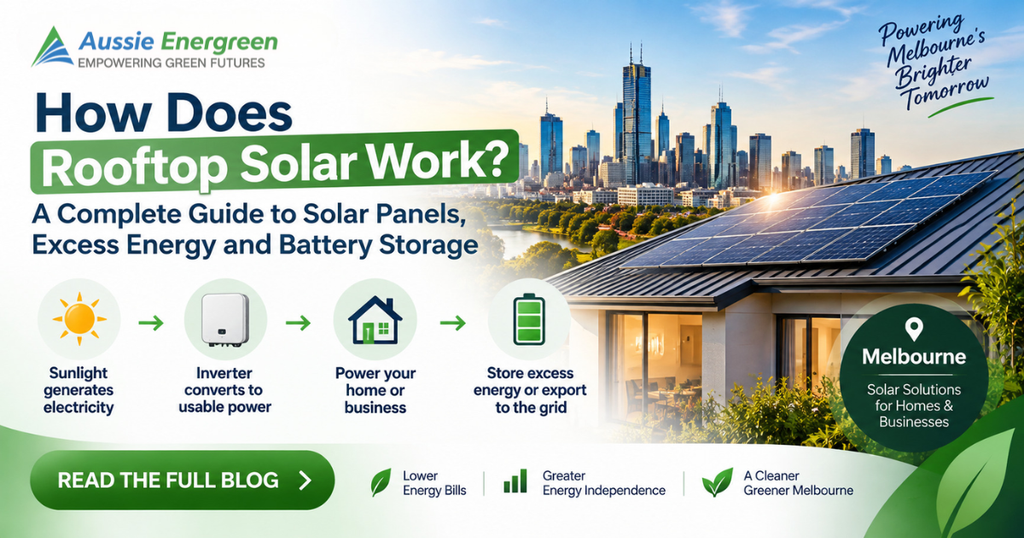
The process is simpler than it may seem. Solar panels capture energy from sunlight, an inverter converts that energy into usable electricity, and your property uses the electricity to power everyday appliances and equipment. Any surplus electricity can either be exported to the grid or stored in a battery for later use.
For Melbourne homes and businesses considering solar, understanding how the system works can help you make better decisions about solar panels, battery storage and your future energy needs.
What Is Rooftop Solar?
A rooftop solar system uses photovoltaic (PV) panels installed on a property’s roof to generate electricity from sunlight.
Solar panels contain photovoltaic cells that convert sunlight into direct current (DC) electricity. Because most properties use alternating current (AC) electricity, the system also requires an inverter to convert the electricity into a usable form.
A typical rooftop solar system includes:
- Solar panels
- Solar inverter
- Mounting equipment
- Electrical wiring and protection
- Monitoring equipment
- Optional battery storage
- Connection to the property’s electrical system
The size and design of the system depend on factors such as electricity consumption, available roof space, roof orientation, shading and future energy requirements.
How Does Rooftop Solar Work?
The solar generation process can be broken down into a few simple steps.
1. Solar Panels Capture Sunlight
The process begins when sunlight reaches the solar panels installed on your roof.
The photovoltaic cells inside the panels convert sunlight into DC electricity.
The amount of electricity generated can vary depending on:
- Available sunlight
- Weather conditions
- Panel orientation
- Roof angle
- Shading
- System size
- Panel efficiency
- Time of day
Solar generation is generally highest during daylight hours, making daytime electricity consumption an important consideration when designing a system.
2. The Inverter Converts the Electricity
The electricity generated by solar panels is DC electricity.
The inverter converts this DC electricity into AC electricity, which can then be used by your property’s electrical system.
The inverter is an important part of the solar installation because it manages the conversion of electricity and, depending on the system, can also provide monitoring and other control functions.
3. Your Property Uses Solar Energy
Once the electricity has been converted into usable AC power, it can be used by your property.
For a home, solar electricity may power:
- Lights
- Refrigerators
- Washing machines
- Air conditioning
- Hot water systems
- Computers
- Kitchen appliances
For a business, solar energy may be used for:
- Lighting
- Air conditioning
- Computers
- Machinery
- Refrigeration
- Office equipment
- Pumps
- Other electrical equipment
The electricity generated by the solar system can be used directly by the property before additional electricity is required from the grid.
What Happens When You Produce More Solar Energy Than You Need?
One of the most common questions about rooftop solar is what happens to unused electricity.
Imagine your solar panels are producing 8kW of electricity while your property is only using 5kW.
The remaining 3kW is surplus solar energy.
Depending on your system configuration, that excess electricity can be:
Stored in a battery for later use, or
Exported to the electricity grid.
If you do not have battery storage, surplus electricity may be exported to the grid under the terms of your electricity retailer agreement. Eligible exported electricity may attract a feed-in tariff.
The amount you receive for exported electricity depends on your retailer and electricity plan.
How Does Solar Battery Storage Work?
A solar battery provides another option for dealing with excess solar generation.
Instead of exporting all surplus electricity to the grid, a battery can store some of the available energy.
For example:
Solar panels → Property uses electricity → Excess electricity → Battery storage
Later, when solar generation falls, stored electricity can be used.
This can be particularly useful during:
- Evening hours
- Early mornings
- Periods of low solar generation
- Times when household or business electricity demand is higher
Battery storage can therefore help a property make greater use of the electricity generated by its own solar system.
Solar Without a Battery
A typical solar system without a battery works approximately like this:
Solar panels → Inverter → Property → Excess electricity → Grid
During the day, your property uses available solar electricity.
If generation exceeds consumption, surplus electricity can be exported to the grid.
When solar generation is unavailable or insufficient, the property can draw electricity from the grid.
Solar With Battery Storage
A system with a battery adds another step:
Solar panels → Inverter → Property → Battery/Grid
When solar generation exceeds your property’s immediate requirements, available surplus electricity can charge the battery.
Later, stored energy can be used when solar generation is lower.
This can increase the amount of solar energy that is consumed on-site rather than exported.
Why Combine Solar and Battery Storage?
Solar and battery storage can complement each other.
Solar panels generate electricity primarily during daylight hours, while many properties continue using electricity after the sun goes down.
A battery can help bridge this gap.
Potential benefits include:
Greater Solar Self-Consumption
Instead of exporting all excess solar electricity, a battery can store some of it for later use.
Reduced Grid Dependence
Using stored solar energy can reduce the amount of electricity your property needs to purchase from the grid.
Better Energy Management
Battery storage gives property owners another way to manage when and how solar-generated electricity is used.
Support for Future Electrification
If you are considering technologies such as electric vehicles, heat pumps or additional electrical equipment, having a well-designed solar and battery system can form part of a broader energy strategy.
However, a battery is not automatically the right choice for every property. System size, electricity usage, tariffs, solar generation and battery costs should all be considered.
How Much Solar Does Your Property Need?
There is no single solar system size that works for every property.
A suitable system should be designed around your actual energy consumption and property characteristics.
Important factors include:
- Current electricity usage
- Daytime energy consumption
- Evening electricity usage
- Available roof space
- Roof orientation
- Roof pitch
- Shading
- Existing electrical infrastructure
- Future energy requirements
- Battery storage plans
- Budget
For businesses, analysing electricity bills and load patterns is particularly important.
A business that uses large amounts of electricity during the day may be able to directly consume a significant portion of its solar generation.
Rooftop Solar for Melbourne Homes
Melbourne homeowners can use rooftop solar to generate renewable electricity for everyday household activities.
Solar can potentially support energy-intensive appliances such as:
- Air conditioners
- Heat pump hot water systems
- Washing machines
- Dishwashers
- Refrigerators
- Electric cooking appliances
- EV chargers
Using solar electricity during daylight hours can help homeowners make better use of the energy generated by their panels.
Adding battery storage can provide another option for using solar-generated electricity after sunset.
Rooftop Solar for Melbourne Businesses
Commercial solar can be particularly useful for businesses with suitable rooftops and consistent daytime electricity consumption.
Examples include:
- Warehouses
- Offices
- Retail stores
- Factories
- Workshops
- Restaurants
- Schools
- Commercial facilities
Businesses may use solar electricity for lighting, heating and cooling, refrigeration, machinery and other equipment.
A commercial solar assessment should consider both current energy consumption and future business requirements.
What Happens When Solar Panels Are Not Generating Enough Electricity?
Solar panels do not produce the same amount of electricity throughout the day.
Generation can fall during:
- Night-time
- Heavy cloud
- Rain
- Shaded conditions
- Periods of reduced sunlight
If your solar system is not producing enough electricity to meet your property’s demand, the remaining electricity can generally be supplied by the grid.
With battery storage, stored energy may also be available depending on the battery’s state of charge and system settings.
This means a typical grid-connected solar property can use a combination of:
Solar + Battery + Grid electricity
depending on generation and consumption at any particular time.
Can Solar Power Your Property During a Blackout?
A standard grid-connected solar system does not necessarily continue supplying electricity during a grid outage.
This is because grid-connected systems generally have protection mechanisms that shut down solar generation when the grid is unavailable.
Some battery systems can provide backup power when designed and installed with appropriate backup functionality.
If backup power is important to you, it should be discussed with your solar and battery installer before choosing the system.
How Can You Make Better Use of Solar Energy?
One of the simplest ways to increase solar self-consumption is to use more electricity while your solar system is generating.
For example, you may choose to operate certain appliances or equipment during daylight hours.
For businesses, this could include scheduling suitable energy-intensive activities during periods of strong solar generation.
For homes, it may include:
- Running washing machines during the day
- Using dishwashers during solar production
- Charging an EV during daylight hours
- Operating a heat pump hot water system when solar generation is available
Smart controls and energy monitoring can also help property owners understand when electricity is being generated and consumed.
Is Solar Worth Considering for Your Property?
The value of a solar system depends on your individual circumstances.
Before installing solar, consider:
- How much electricity you currently use
- When you use the most electricity
- How much roof space is available
- Whether your roof receives suitable sunlight
- Whether you want battery storage
- Your current electricity plan
- Your future energy requirements
A professional solar assessment can help determine whether rooftop solar is suitable and what system configuration may work for your property.
Why Choose Aussie Energreen?
At Aussie Energreen, we help Melbourne homeowners and businesses explore practical clean-energy solutions.
Our solutions can include:
- Rooftop solar systems
- Commercial solar
- Solar battery storage
- Heat pump hot water systems
- Energy-efficient air conditioning
- Commercial LED lighting
- EV charging solutions
- Other energy-efficiency upgrades
We can assess your property’s energy requirements and help you understand how solar and battery storage could fit into your broader energy strategy.
Conclusion
Rooftop solar is more than simply installing panels on a roof.
The system works by converting sunlight into electricity, converting that electricity into usable AC power and directing it where it is needed.
When your property produces more solar electricity than it immediately needs, the surplus can generally be exported to the grid or stored in a battery, depending on your system.
A well-designed solar + battery system can help property owners make greater use of the renewable electricity generated on-site and reduce reliance on grid electricity.
Whether you’re considering solar for your Melbourne home or business, understanding how the system works is the first step towards making an informed energy decision.
Ready to explore rooftop solar or battery storage for your property?
Contact Aussie Energreen today.
📞 1300 231 289
🌐 www.aussieenergreen.com.au
📧 info@aussieenergreen.com.au
Frequently Asked Questions
How do rooftop solar panels generate electricity?
Solar panels use photovoltaic cells to convert sunlight into DC electricity. An inverter then converts the electricity into AC power that can be used by the property.
What happens to excess solar energy?
Excess electricity can generally be exported to the electricity grid or stored in a battery, depending on the system configuration.
Is a battery necessary with solar panels?
No. A solar system can operate without a battery. However, battery storage can allow more excess solar electricity to be stored and used later.
Can solar panels power a house at night?
Solar panels do not generate electricity at night. A property can use electricity from the grid or, if available, stored energy from a battery.
Can businesses install rooftop solar?
Yes. Commercial solar can be suitable for many businesses, including offices, warehouses, factories, retail premises and other properties with suitable roofs and energy requirements.
Does solar work on cloudy days?
Solar panels can still generate electricity under cloudy conditions, although generation is generally lower than during periods of strong sunlight.
Can a solar battery provide backup power?
Some battery systems can provide backup power when they are specifically designed and installed with suitable backup functionality. Not every solar battery system provides backup during a grid outage.
How do I know what size solar system I need?
The appropriate system size depends on factors such as electricity consumption, daytime energy use, roof space, shading, system orientation, future energy needs and whether battery storage is included.