
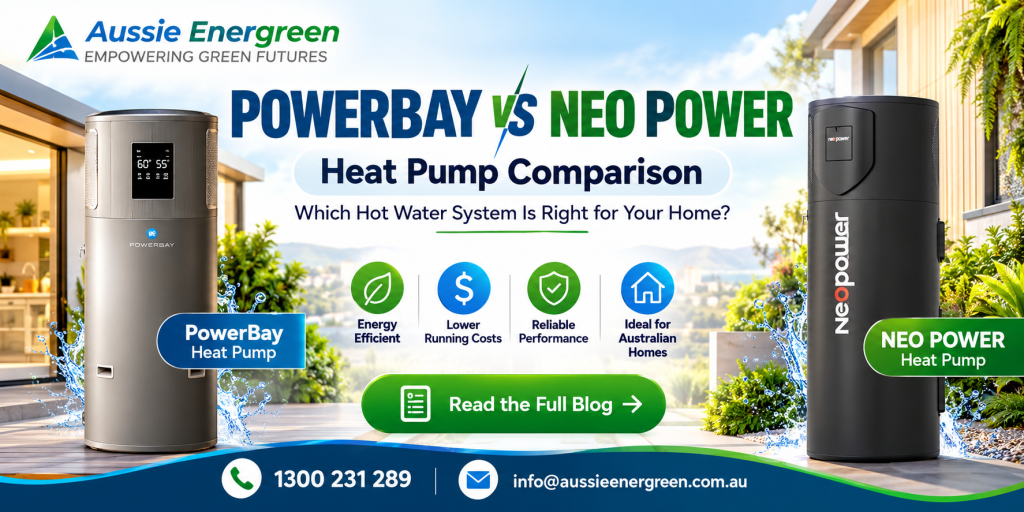
If you’re looking to replace an older hot water system, a heat pump hot water system can be an energy-efficient alternative worth considering. Instead of generating heat in the same way as a conventional electric storage system, a heat pump transfers heat from the surrounding air to heat the water.
Two options Melbourne homeowners may come across are PowerBay and NeoPower. Both brands offer heat pump hot water systems designed for Australian conditions, with different capacities, controls and specifications.
In this guide, we look at PowerBay vs NeoPower heat pump hot water systems and the key factors to consider when selecting a system for your home.
What Is a Heat Pump Hot Water System?
A heat pump hot water system uses electricity to move heat from the surrounding air into a water storage tank.
Because it transfers heat rather than relying solely on an electrical resistance element, a heat pump can use less electricity for water heating under suitable operating conditions.
Modern systems can also include features such as:
- Energy-efficient heating
- Multiple operating modes
- Backup heating elements
- Digital controls
- Wi-Fi monitoring on selected models
- Different tank capacities
- Solar integration opportunities
The most suitable system depends on your household size, hot water usage, available space and existing energy setup.
PowerBay Heat Pump Hot Water System
PowerBay offers Gen II heat pump hot water systems in different storage capacities, including 200L and 300L models.
The PowerBay 200L Gen II model has a listed COP of up to 4.0, uses R290 refrigerant and includes AI and Wi-Fi control. The manufacturer lists an operating temperature range of -7°C to 45°C and a maximum outlet water temperature of 70°C.
The 300L model also lists a COP of up to 4.0, R290 refrigerant, AI + Wi-Fi control and an operating range of -7°C to 45°C.
Key PowerBay Features
Energy-efficient operation
The PowerBay systems are designed to reduce electricity consumption compared with conventional electric water heating under suitable conditions.
R290 refrigerant
The Gen II models use R290 refrigerant.
Wi-Fi and smart control
PowerBay lists AI and Wi-Fi control, allowing connected monitoring and control capabilities.
Multiple tank sizes
The range includes different capacities, allowing homeowners to select a tank according to household requirements.
Australian installation suitability
PowerBay lists its systems for installation across Australia, with the specified operating range depending on the model.
NeoPower Heat Pump Hot Water System
NeoPower also offers a range of heat pump hot water systems for Australian homes.
Its current Black Shield DC Inverter range includes 210L, 270L and 320L models. The manufacturer lists a COP of 5.4 under specified test conditions, a 3kW rated heating capacity and R290 refrigerant.
The systems have a stated operating temperature range of -7°C to +46°C, with Standard, Eco, Hybrid and Sterilisation operating modes.
Key NeoPower Features
DC inverter technology
The Black Shield range uses a DC inverter compressor, with the manufacturer listing a rated input power of 0.556kW for the models shown.
Multiple capacity options
The Black Shield range is available in 210L, 270L and 320L capacities.
R290 refrigerant
The systems use R290 refrigerant.
Multiple operating modes
Standard, Eco, Hybrid and Sterilisation modes are available on the listed Black Shield models.
Wi-Fi control
NeoPower lists Wi-Fi control through the Smart Life App for the Black Shield range.
PowerBay vs NeoPower Heat Pump Hot Water Systems: Key Specifications
The exact specifications vary by model, so it’s important to compare the particular systems you’re considering.
| Feature | PowerBay Gen II | NeoPower Black Shield |
|---|---|---|
| Available capacities | 200L, 300L and other configurations | 210L, 270L, 320L |
| Refrigerant | R290 | R290 |
| COP | Up to 4.0 | 5.4 under listed test conditions |
| Operating range | -7°C to 45°C | -7°C to +46°C |
| Maximum water temperature | Up to 70°C | Up to 75°C |
| Smart control | AI + Wi-Fi | Wi-Fi / Smart Life App |
| Backup heating | Electric heating element | 1.6kW backup element |
| System type | Heat pump hot water | DC inverter heat pump |
| Operating modes | Model dependent | Standard, Eco, Hybrid, Sterilisation |
COP figures are based on manufacturer-specified test conditions and should not be treated as a direct prediction of household energy savings. Exact specifications vary by model.
Which Tank Size Do You Need?
Tank capacity is one of the most important factors when choosing a heat pump hot water system.
A system that’s too small may struggle to meet peak demand, while a larger tank may require more installation space.
Smaller Households
A smaller household may be suited to a system around the 200–210L range, depending on hot water usage.
Medium-Sized Households
Homes with several occupants may need a larger tank, such as a 250–270L system.
Larger Households
For households with higher hot water demand, a 300–320L system may provide additional storage capacity.
These are general guidelines only. Actual requirements depend on shower usage, appliance use, household routines and water-saving fixtures.
What Should You Consider Before Choosing?
1. Household Size
The number of people living in the property can affect how much hot water is required each day.
2. Daily Hot Water Usage
Two households with the same number of occupants may have very different hot water consumption.
Consider shower frequency, shower duration, baths, washing and other hot water use.
3. Available Installation Space
Heat pump systems are larger than some conventional hot water units, so available outdoor or indoor space should be checked before installation.
4. Climate and Operating Conditions
Melbourne’s weather varies throughout the year. Heat pump performance can change depending on ambient temperature and operating conditions.
Both PowerBay and NeoPower specify operating temperature ranges designed for Australian conditions.
5. Solar Integration
If your home already has solar panels, a heat pump can potentially use surplus solar generation for water heating.
An installer can help determine how the system can be operated alongside your existing solar setup.
6. Smart Controls
Wi-Fi and app-based monitoring can make it easier to control settings and monitor system operation.
Both PowerBay and NeoPower offer smart-control features on the models discussed above.
Heat Pump vs Traditional Electric Hot Water
Traditional electric storage systems generally use an electrical heating element to heat the water.
A heat pump works differently by transferring heat from the surrounding air into the water.
This can provide a more energy-efficient method of heating water under suitable operating conditions.
However, actual electricity consumption depends on factors such as:
- Ambient temperature
- Hot water demand
- Water temperature settings
- System operating mode
- Installation conditions
- Household usage patterns
Is a Heat Pump Suitable for a Melbourne Home?
A heat pump may be worth considering if you’re:
- Replacing an old electric hot water system
- Looking to reduce hot water energy consumption
- Installing solar or already have solar
- Planning an energy-efficient home upgrade
- Looking for smart monitoring and control
- Replacing a gas or electric storage system
Before purchasing, an installer should assess your current hot water system, household demand, available installation area and electrical requirements.
Why Professional Installation Matters
Heat pump hot water systems involve plumbing, electrical connections and system commissioning.
A professional installer can assess:
- Existing hot water system
- Tank location
- Plumbing connections
- Electrical supply
- Household hot water demand
- Drainage requirements
- Available installation space
- Solar integration opportunities
- Applicable rebate or incentive eligibility
Correct installation can help ensure the system operates safely and according to manufacturer requirements.
Frequently Asked Questions
1. What is the difference between PowerBay and NeoPower heat pumps?
Both provide heat pump hot water solutions, but their available capacities, system architecture, specifications and controls differ. The specific model should be compared rather than the brand alone.
2. Is PowerBay a heat pump hot water system?
Yes. PowerBay offers Gen II heat pump hot water systems, including 200L and 300L models.
3. What NeoPower heat pump sizes are available?
The NeoPower Black Shield range currently lists 210L, 270L and 320L models.
4. Do PowerBay and NeoPower use R290 refrigerant?
Yes. The PowerBay Gen II systems and NeoPower Black Shield systems referenced here use R290 refrigerant.
5. Can a heat pump work with solar panels?
Yes, a heat pump can be operated alongside a solar PV system. The exact setup depends on the home’s solar system, electrical configuration and control strategy.
6. How do I choose the right tank size?
Consider household size, daily hot water consumption and usage patterns. An installer can assess your requirements and recommend an appropriate capacity.
7. Do these systems have backup heating?
Yes. PowerBay systems include an electric heating element, while the NeoPower Black Shield models listed by the manufacturer include a 1.6kW backup electric heater.
8. Can I monitor these systems remotely?
PowerBay lists AI and Wi-Fi control, while NeoPower’s Black Shield range lists Wi-Fi control through the Smart Life App.
Summary
When comparing PowerBay vs NeoPower heat pump hot water systems, both offer modern alternatives to conventional electric hot water systems.
PowerBay’s Gen II range offers features including R290 refrigerant, Wi-Fi control, multiple tank capacities and heat pump technology, with models such as the 200L and 300L systems.
NeoPower’s Black Shield range offers 210L, 270L and 320L options, DC inverter technology, R290 refrigerant, multiple operating modes and Wi-Fi control.
The right system for your Melbourne home depends on your household size, hot water consumption, available installation space, solar system, electrical requirements and future energy plans.
Rather than choosing based on capacity or brand alone, compare the specifications of the exact model and have the installation assessed professionally.
Upgrade Your Hot Water System with Aussie Energreen
Thinking about upgrading your hot water system in Melbourne?
Aussie Energreen can help you explore energy-efficient heat pump hot water solutions suited to your home’s requirements.
📞 1300 231 289
📧 info@aussieenergreen.com.au
🌐 www.aussieenergreen.com.au
📍 Melbourne, Victoria
Aussie Energreen – Empowering Green Futures