
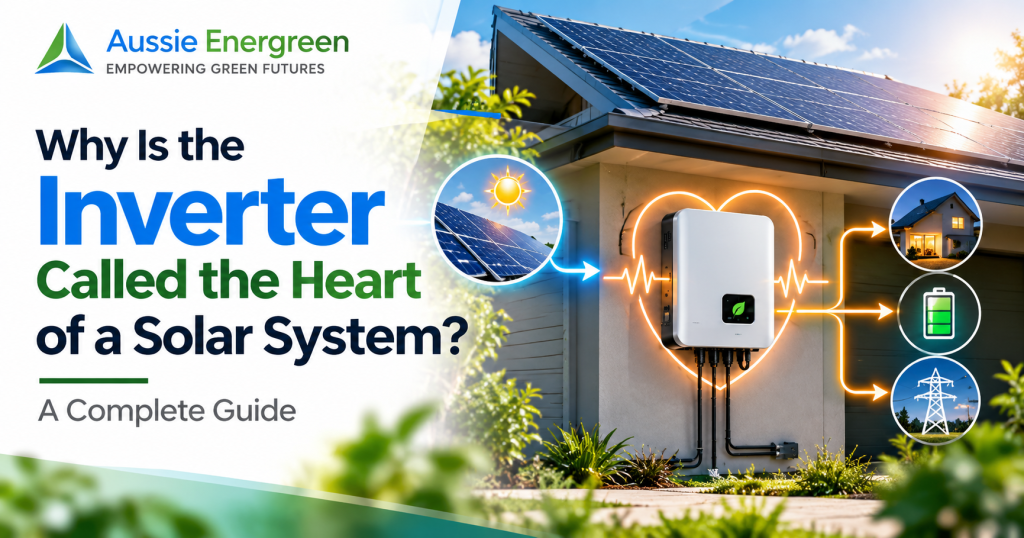
When people talk about solar power, most of the attention goes to the panels on the roof. While solar panels are responsible for capturing energy from the sun, there is another component that plays a crucial role in making that electricity useful for your home or business: the solar inverter.
Often described as the “heart” of a solar system, the inverter manages the flow and conversion of electricity between your solar panels, household appliances, battery storage and the electricity grid.
But what exactly does a solar inverter do, and why is it so important?
In this guide, Aussie Energreen explains how solar inverters work, why they matter and what Melbourne homeowners should consider when choosing a solar energy system.
What Is a Solar Inverter?
Solar panels generate electricity in direct current (DC) form.
However, most appliances and electrical systems in Australian homes and businesses use alternating current (AC) electricity.
The solar inverter performs the important job of converting the electricity produced by the panels from DC into AC so it can be used by the property.
In simple terms:
Sunlight → Solar Panels → DC Electricity → Inverter → AC Electricity → Home/Business
Without an appropriate inverter, the electricity generated by conventional rooftop solar panels cannot be used directly by most of the property’s electrical appliances.
Why Is the Inverter Called the Heart of a Solar System?
The inverter does much more than simply convert electricity.
It acts as an important connection point between different parts of a modern solar energy system.
Depending on the system configuration, the inverter can manage electricity flowing between:
- Solar panels
- Household appliances
- Commercial equipment
- Battery storage
- The electricity grid
- Energy monitoring systems
This makes the inverter an important part of how the entire solar system operates.
Just as the heart helps circulate blood throughout the body, the inverter helps manage and direct electrical energy throughout a solar system.
How Does a Solar Inverter Work?
Let’s look at the process step by step.
1. Solar Panels Capture Sunlight
Solar panels are made up of photovoltaic cells that generate electricity when exposed to sunlight.
The electricity produced by the panels is DC electricity.
2. DC Electricity Travels to the Inverter
The electricity generated by the solar panels is sent to the solar inverter.
The inverter receives this DC electricity and prepares it for use within the property’s electrical system.
3. The Inverter Converts DC to AC
The inverter converts the electricity from DC into AC.
This is the form of electricity generally used by household appliances, lighting and other electrical equipment.
4. Electricity Can Be Used by the Property
Once converted, the electricity can be used to power appliances and equipment within the home or business.
If the solar system generates more electricity than the property needs at that moment, the surplus may be exported to the electricity grid or directed to battery storage, depending on the system.
What Happens to Excess Solar Energy?
Solar generation and household electricity consumption don’t always occur at the same time.
For example, solar panels may generate a significant amount of electricity around midday when household electricity demand is relatively low.
Depending on the system configuration, excess electricity may:
Be used immediately
The property can use available solar electricity to power appliances and equipment.
Charge a battery
If battery storage is installed, surplus solar energy can potentially be stored for later use.
Be exported to the grid
If there is no battery or the battery is already sufficiently charged, surplus electricity may be exported to the electricity grid, subject to the property’s system and electricity retailer arrangements.
The Inverter and Solar Battery Storage
Modern solar systems can include battery storage, and the inverter plays an important role in managing how electricity moves between the solar panels, battery and property.
A solar-plus-battery system may operate like this:
Solar Panels → Inverter → Home
When there is excess generation:
Solar Panels → Inverter → Battery
Later, when solar generation falls:
Battery → Inverter → Home
The exact energy flow depends on the type of inverter and battery system installed.
Different Types of Solar Inverters
There isn’t just one type of solar inverter. The most suitable option depends on the solar system and the property’s requirements.
String Inverters
String inverters are commonly used in residential solar installations.
Multiple solar panels are connected together into one or more strings, with the inverter converting the generated DC electricity into AC.
They can be a practical option for many straightforward rooftop solar installations.
Microinverters
Microinverters are installed at the individual panel level.
Instead of one central inverter handling several panels, each panel can have its own microinverter.
This approach can be useful for certain roofs where panels have different orientations or shading conditions.
Hybrid Inverters
Hybrid inverters are designed to work with both solar panels and battery storage.
They can help manage electricity flowing between:
- Solar panels
- Home
- Battery
- Grid
For homeowners considering battery storage now or in the future, a compatible hybrid inverter may be an important consideration.
Why Inverter Efficiency Matters
Not all the electricity generated by your solar panels will necessarily reach your appliances in exactly the same form.
Energy conversion involves some losses, which means inverter efficiency is an important specification to consider.
A well-designed solar system should use appropriately matched equipment so that the panels, inverter and other components operate effectively together.
However, homeowners shouldn’t choose an inverter based on efficiency alone.
The complete system design is equally important.
Solar Inverter Monitoring
Many modern inverters provide monitoring capabilities that allow homeowners to view information about their solar system.
Depending on the inverter and monitoring platform, you may be able to see:
- Solar energy production
- Current power generation
- Household electricity consumption
- Grid electricity usage
- Solar exports
- Battery charging
- Battery discharge
- System performance alerts
Monitoring can help homeowners understand how their solar system performs throughout the day.
For example, you may notice that solar production peaks around midday while electricity consumption increases later in the afternoon.
This information can help you better understand your home’s energy patterns.
What Happens When the Grid Goes Down?
A standard grid-connected solar system is generally designed to shut down during a grid outage for safety reasons.
This is important because electricity may otherwise continue flowing into the grid while utility workers are carrying out repairs.
If you want solar power available during an outage, you need an appropriately designed backup system with compatible equipment.
Depending on the system, backup solutions may allow selected appliances or broader household loads to continue operating.
Backup performance depends on factors including:
- Inverter capacity
- Battery capacity
- Backup equipment
- Electrical configuration
- Connected loads
How Does an Inverter Affect Solar System Performance?
The inverter is an important part of the overall solar system, so choosing an appropriately matched model matters.
The inverter needs to work effectively with the solar panels and other system components.
Factors that can influence inverter selection include:
Solar system size
The inverter should be appropriately matched to the solar array.
Roof design
Panel orientation, roof sections and shading can influence system design.
Battery plans
If you plan to add battery storage, your inverter requirements may be different.
Electrical supply
Single-phase and three-phase properties can require different system configurations.
Future energy needs
An EV, heat pump hot water system or additional solar capacity may affect future electricity requirements.
Solar Inverters for Melbourne Homes
Melbourne properties can have very different solar requirements.
A small home with a simple roof may have very different needs from a larger property with multiple roof orientations, significant electricity consumption and battery storage.
Melbourne homeowners should consider:
- Roof orientation
- Roof space
- Shading
- Solar system size
- Household electricity consumption
- Battery requirements
- Electrical phase
- Future energy upgrades
A properly designed system can help ensure the inverter is appropriately matched to the solar installation.
Solar Inverters for Commercial Properties
Inverters are also an important part of commercial solar systems.
Businesses such as:
- Warehouses
- Offices
- Factories
- Retail businesses
- Farms
- Workshops
may have substantially higher electricity consumption than residential properties.
Commercial solar systems can therefore require different inverter configurations and system designs.
The appropriate setup depends on factors such as the property’s energy demand, available roof space, solar capacity and electrical infrastructure.
Common Signs Your Solar Inverter May Need Attention
If your solar system isn’t performing as expected, the inverter is one of the components that may need to be checked.
Possible warning signs can include:
- Unexpected reduction in solar generation
- Error messages on the inverter
- Warning lights
- Monitoring interruptions
- Unusual system shutdowns
- Significant changes in solar production
A drop in solar production doesn’t necessarily mean the inverter is faulty. Other issues, such as shading, panel problems, wiring or grid conditions, may also affect system performance.
If you notice an issue, a qualified professional should inspect the system rather than attempting electrical repairs yourself.
How to Choose the Right Solar Inverter
When comparing solar systems, don’t look at the inverter in isolation.
Consider the complete system.
Check compatibility
The inverter should be compatible with the selected solar panels and other equipment.
Consider battery storage
If you want battery storage now or later, discuss this before selecting the inverter.
Look at monitoring
A good monitoring platform can make it easier to understand your system’s performance.
Consider backup requirements
If backup power is important, ensure the selected system can support the required configuration.
Think about future upgrades
Consider EV charging, additional solar panels, heat pump hot water and other future electricity loads.
Why Choose Aussie Energreen?
At Aussie Energreen, we understand that a solar system is more than just a collection of panels.
The panels, inverter, battery, electrical infrastructure and energy requirements all need to work together as part of a suitable system design.
We provide energy solutions including:
- Solar panel systems
- Solar battery storage
- Hybrid solar systems
- Heat pump hot water systems
- Air conditioning
- EV charging
- Commercial solar solutions
- Energy-efficient upgrades
Our team can help Melbourne homeowners and businesses explore solar solutions based on their energy requirements.
Conclusion
The solar inverter may not be the most visible part of a solar installation, but it plays a crucial role in making the electricity generated by your panels usable.
It converts DC electricity into AC, helps manage energy flow and can connect different parts of a modern solar system, including batteries and the electricity grid.
That’s why the inverter is often described as the “heart” of a solar system.
When planning solar for your Melbourne home or business, consider the complete system rather than focusing only on the number of panels. Choosing appropriately matched equipment can help create a solar solution designed around your property’s energy requirements.
Frequently Asked Questions
What does a solar inverter do?
A solar inverter converts the DC electricity produced by solar panels into AC electricity that can be used by most household and commercial electrical equipment.
Why is the inverter called the heart of a solar system?
The inverter is an important connection point that manages and converts electricity between the solar panels, property, battery and grid, depending on the system configuration.
Can a solar system work without an inverter?
Conventional rooftop solar systems require an inverter to convert the DC electricity produced by the panels into usable AC electricity.
Do solar batteries need an inverter?
Battery systems require suitable power-conversion equipment to manage electricity between the battery, solar system, property and grid. The exact configuration depends on the battery and inverter technology used.
What is a hybrid inverter?
A hybrid inverter is designed to manage solar generation and battery storage within a compatible system.
How long does a solar inverter last?
The operating life of an inverter varies depending on the model, installation conditions, system usage and maintenance. Manufacturers provide product-specific warranty and lifespan information.
Can I add a battery to my existing solar system?
In many cases, battery storage can be added to an existing solar system. However, the existing inverter and electrical configuration should be assessed for compatibility.
What happens to solar power during a blackout?
Most standard grid-connected solar systems automatically shut down during a grid outage. A suitably designed backup system is required if you want solar and battery power available during an outage.
Talk to Aussie Energreen
Thinking about installing solar or upgrading your existing energy system in Melbourne?
Aussie Energreen can help you explore solar, battery and energy-efficiency solutions suited to your property.
📞 1300 231 289
📧 info@aussieenergreen.com.au
🌐 www.aussieenergreen.com.au
Aussie Energreen – Empowering Green Futures.